Design Thinking: From Real-World Problems to Tested Solutions
From Real-World Problems to Tested Solutions
Frame real-world community problems through user empathy, brainstorming, rapid prototyping, and iterative team testing.
About this Workshop
This workshop is part of Creya Learning's Makers Day Out 101 Series, a collection of immersive, hands-on experiences that enables students to learn as makers, designers and problem-solvers. Each workshop combines creativity, investigation, collaboration and making to help students develop the confidence to turn their ideas into meaningful solutions.
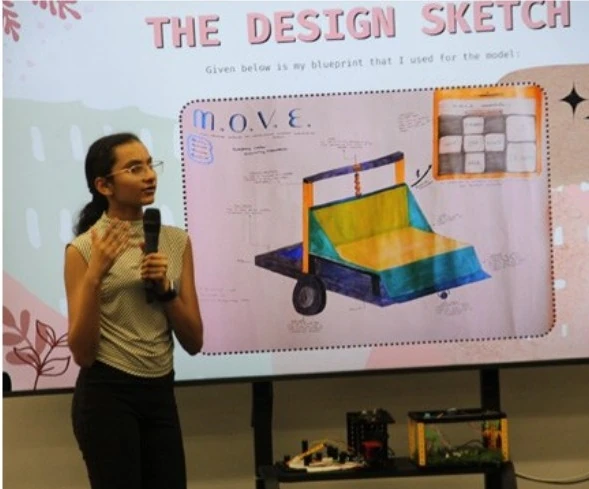
The Design Thinking workshop invites students to take on a real-world challenge and experience the complete journey from understanding a problem to developing a tested solution. Rather than jumping immediately to the first idea, students investigate the people affected, identify their needs and define the problem clearly.
Working in teams, students generate multiple possibilities, select a promising idea and transform it into a physical or visual prototype using accessible STEAM materials. They test the prototype, gather feedback and improve their solution, discovering that good solutions evolve through curiosity, experimentation, feedback and iteration.
Workshop at a Glance
Grades 4–6 · Grades 7–12
Age-appropriate for each grade group
4.5 hours, including a 30-minute break
Real-world challenge, user investigation, collaborative ideation, prototyping, testing and presentation
No prior Design Thinking or prototyping experience is required
Simple, accessible STEAM and prototyping materials
Expected Impact & Student Takeaways
Workshop Schedule
Introduction to Design Thinking and Its Importance
Explore what Design Thinking is, why it begins with people and how it supports meaningful innovation. Understand the stages and why experimentation and improvement are essential.
Define: Understand the User and Challenge
Receive the challenge and identify the people affected. Use observation, interviews, role-play or empathy mapping to understand what users experience, think, feel and need. Separate evidence from assumptions.
Define: Frame the Right Problem
Organise the team's findings, identify the most important user need and create a focused problem statement or 'How might we?' question.
Ideate: Generate Possibilities
Use brainstorming and creative-thinking techniques to generate multiple solutions. Build on teammates' ideas, compare possibilities and select a promising direction using agreed criteria.
Prototype: Make the Idea Visible
Plan and build a simple prototype using available STEAM materials. Focus on the essential features that demonstrate how the proposed solution will help the user.
Evaluate: Test and Improve
Test the prototype with another team or user, observe how it is used and gather feedback. Identify what worked and what should change, then make at least one meaningful improvement.
Reflect and Present
Core Learning Pillars
Empathy and User Understanding
Observe, listen and ask questions to understand what people experience, need and find difficult.
The Design Thinking Cycle
Define a meaningful problem, generate ideas, prototype, test with users and improve using evidence.
STEAM Application
Use ideas from Science, Technology, Engineering, Art and Mathematics to support the solution.
Collaboration and Communication
Share ideas, listen to different viewpoints, divide responsibilities and explain decisions.
Creative Confidence
Develop the willingness to experiment, learn from unsuccessful attempts and try again.
Presentation and Storytelling
Communicate the user, problem, solution, testing and improvements through a prototype demo.
Why Participate?
Work on a problem connected to real people and genuine needs.
Learn why good solutions begin with listening, observing and questioning.
Transform sketches and discussions into a prototype that others can experience.
Draw upon Science, Technology, Engineering, Art and Mathematics while developing the solution.
Work with teammates to share ideas, make decisions and divide responsibilities.
Explain the problem, design choices, testing evidence and improvements clearly.
Become more comfortable exploring unfamiliar problems and trying different approaches.
Move through Define, Ideate, Prototype, Evaluate and Reflect in one immersive workshop.
Develop the maker mindset and problem-solving skills for future STEAM and innovation challenges.
Explore Other Workshops
Early Robotics
Grades 1–3Build moving robots with coding blocks and sensors, then tackle playful challenge courses through hands-on tinkering.
App Development (MIT App Inventor)
Grades 1–3 & Grades 4–6Design interactive mobile apps using visual blocks, buttons, and sounds to solve everyday problems as creators.
Generative AI
Grades 4–6 & Grades 7–12Master prompt crafting and creative AI tools to generate rich stories, visual concepts, and interactive media responsibly.
Build with AI
Grades 4–6 & Grades 7–12Build functional AI-powered mini-applications, custom helpdesks, and smart assistants using prompt pipelines and logic.
Ready to Start Creating?
Join our Maker Workshops and turn your ideas into reality with hands-on projects and expert guidance.